Encroachments, Surveys, Boundary Lines and "Adverse Possession" in Tacoma
Property line disputes can derail a Tacoma home sale. Learn how surveys, encroachments, boundary lines, and adverse possession work in Washington State—and why a fence, wall, or drain pipe can become a costly surprise.
Aspiring real estate Brokers in Tacoma, WA must take 90 hours of class and pass a written exam before getting a Broker's license - a rather modest barrier to entry actually, considering what the actual demands of the job. The material we learn in this early step is seldom relevant to the day to day doings of a Broker once they go out there into the wild representing buyers and sellers.
Students learn that an acre is 43,560 square feet. I’ll never forget that one... and I do use it! This past week another term from the class/test cropped up; one that comes up just often enough to stick in mind. Adverse Possession. Sounds a little... hostile, right? That’s part of it, actually.
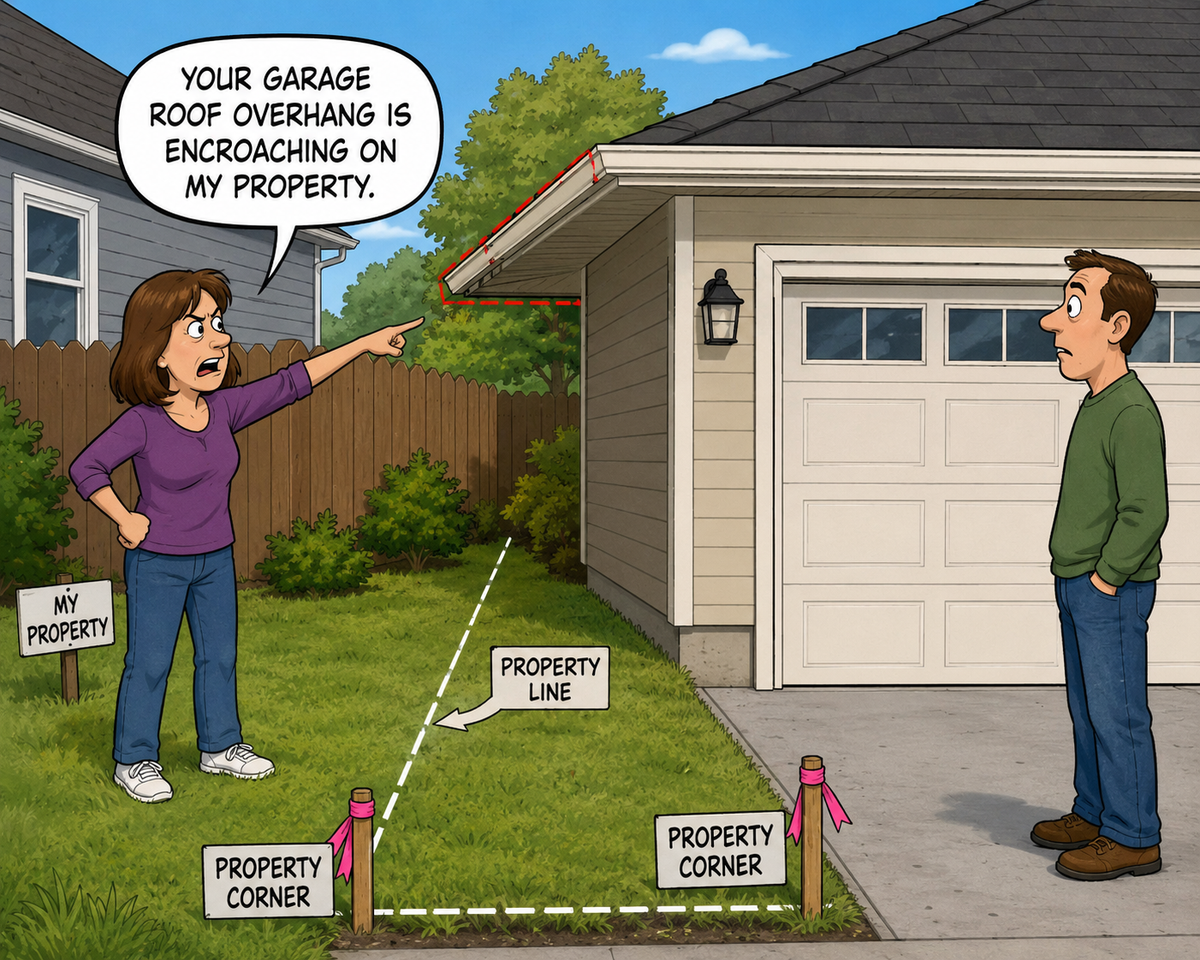
We just sold a house where the next door neighbor had recently had a survey done, which means the corners were marked and therefore the boundaries became clear. They discovered that a few things were over the property line, essentially encroaching on her lot. One of those things was part of a black plastic (ABS) storm drain system that shuttled rainwater from the roof out to the street. The part that was on her lot was the underground drainline leading out to the street. It was probably less than a foot over the line. The other was a brick wall that helped to enclose the backyard of the for-sale property and held up the cover over its patio. The brick used in that wall matched the house, likely because they were built at the same time half a century ago. One of these was a problem and one was not.
What would you guess? The brick wall or the the underground drainline?
What is Adverse Possession?
It is a legal concept that's been around for centuries. The basic idea: if someone openly uses a piece of land that isn't theirs —continuously, for long enough, without the owner's objection — they can eventually claim legal ownership of it. In Washington State, the threshold is ten years. Now, nobody's sneaking onto your property at night. We're talking about things that happen slowly and quietly. A fence gets built a few feet over the property line. A driveway gets paved across a corner of the neighbor's lot. A retaining wall goes up and nobody says anything, year after year. But it kind of needs to be out in the open to qualify. I am not an attorney but I have always assumed that this was the adverse part - you’re just doing something without permission on someone else’s property.
The wall I mentioned had clearly been there for a long, long time. Visible from the street. Maintained by the homeowner. The buyer's attorney reviewed it and felt confident — that wall met the standard for adverse possession. It wasn't going anywhere. But what of that underground pipe? That was pretty much invisible! For adverse possession to apply, the use generally has to be open and visible — not buried six inches under someone's lawn. Those pipes likely didn’t meet the standard. So rather than fight it out legally, we all determined the pipes would simply be relocated. It cost the seller several thousand dollars.
Not Always a Problem
Encroachments like this are not rare, but they don’t usually become a problem. Go drive through any established neighborhood in Tacoma and look at the fences. A lot of them weren't built with a survey. They were built where it seemed right at the time. Some of those fences are on the line. Some of them aren't. Maybe even “most” are not. As long as neighbors get along, nobody cares. But people move. Relationships change. A new neighbor comes in and suddenly has questions. Or you put the house on the market and the parties start looking into things like property lines. That's when it can matter and where this question of adverse possession jumps from a question on the real estate exam to a relevant concept to work through.
If you're buying or selling a home — especially an older one — it might be worth knowing whether a survey has been done recently, and whether there are any structures near property lines. Fences, walls, sheds, even drainage. These things don't always create problems, but when they do, it tends to be at the worst possible time. I am not suggesting you go looking for issues, but be aware that this sort of thing CAN crop up. The only way to really know where the property line really is, is to do a survey!
You might also enjoy... Why So Many Overpriced Houses in Tacoma?